

Best CD Rates of February 2026: Top Certificates of Deposit Offering Up to 4.50% APY or More

Best CD Rates of February 2026: Top Certificates of Deposit Offering Up to 4.50% APY or More

Last verified: February 2nd, 2026

Introduction

The best CD rates in February 2026 reach up to 4.50% Annual Percentage Yield (APY) or more, with top-paying financial institutions like Financial Partners Credit Union leading in short-term offers.

As February begins, savers are keeping a close eye on CD rates—and for good reason. After months of elevated yields, signs are pointing to a gradual shift.

CD Valet is forecasting CD rates to continue to trend lower overall, with the most pressure falling on terms longer than 12 months. Much of the near-term movement hinges on whether the Federal Open Market Committee (FOMC) surprises markets with a rate cut. While a rate reduction would prompt financial institutions to lower deposit rates, inflation is still elevated and GDP forecasts point to a resilient economy —  signs that do not necessarily point to a rate decrease.

“We’re in a moment where economic signals are mixed, and that uncertainty is exactly what savers should be paying attention to,” said Mary Grace Roske, Head of Marketing & Communications at CD Valet. “It may be a smart move to open a CD now, but strategy matters when deciding which CD to open, especially if you need some flexibility with your savings.”

No-penalty CDs can be particularly attractive in uncertain conditions. These CDs allow you to withdraw funds before maturity without an early withdrawal penalty, offering peace of mind if rates change. CD Valet’s team of RateWatchers are tracking at least 150 no-penalty CD rates currently offered by federally insured financial institutions (as of 2/2/2026). These days, flexibility can be just as valuable as yield.

What You’ll Learn:

  • Current best rates from federally insured banks and credit unions
  • Common types of certificates of deposit
  • What to consider when comparing rates
  • How to find and secure a competitive APY
  • Smart savings strategies like CD laddering to maximize returns

Current Best CD Rates

Best short term CDs (up to 12 months)

Financial Partners Credit Union leads with one of the highest-yielding rates in short-term offerings: an 8-month CD special at 6.00% APY ($1,000 min. deposit), only for qualifying new members. The CD special has a $5,000 maximum deposit limit. Serving residents and businesses in seven counties in Montana, Daniels-Sheridan FCU is offering 5.11% APY for a 12-month CD with a low $500 minimum deposit.

When comparing CDs from FDIC-insured banks, Spring Bank rises to the top with its 8-month CD with a 4.50% APY and low minimum deposit of $250. Farmers and Merchants Bank has a competitive 9-month CD special at 4.37% APY and a $75,000 minimum. For those who want some flexibility with their savings, Climate First Bank is offering a 6-month penalty-free CD with a 4.27% APY ($500 minimum deposit).

Best long term CDs (12+ months)

When it comes to longer-term CDs, Select Federal Credit Union has a competitive 36-month CD with a 4.90% APY and a $25,000 minimum deposit. For their 65th anniversary special, Lynchburg Municipal Employees Federal Credit Union has a 78-month CD with a 6.50% APY ($650 minimum deposit, $10,000 maximum deposit).

Looking at rates from FDIC-insured banks, State Savings Bank is offering 4.32% APY for its 55-month special flex CD if your initial deposit is between $2,000 to $245,000. The bank’s deposit accounts are only available to residents of Iowa in Polk, Jasper and surrounding counties. United Fidelity Bank has a 60-month CD offering 4.15% APY and a $1,000 minimum deposit. First National Bank and Trust of Bottineau has a 60-month CD with 4.14% APY and a minimum deposit of $500.

Financial InstitutionAnnual Percentage Yield (APY)TermMinimum Deposit
Lynchburg Municipal Employees FCU6.50% APY*78-month$650
Financial Partners Credit Union6.00% APY*8-month
$1,000
Daniels-Sheridan FCU5.11% APY*12-month$500
Select Federal Credit Union4.90% APY*36-month$25,000
Spring Bank4.50% APY*8-month$250
Farmers and Merchants Bank4.37% APY*9-month$75,000
State Savings Bank4.32% APY*55-month$2,000
Climate First Bank4.27% APY*6-month$500
United Fidelity Bank4.15% APY*60-month$1,000
First National Bank and Trust of Bottineau4.14% APY*60-month$500

Understanding CDs and how they work

A certificate of deposit (CD) is a low-risk, federally-insured savings account. You agree to keep your money in the account for a fixed term, and the financial institution agrees to pay you a fixed interest rate, providing fixed and predictable returns. Minimum deposit requirements for CDs can vary widely, from $0 to $10,000 or more.

Typically, most banks are federally insured by the FDIC while credit unions are insured by NCUA. Some financial institutions are privately insured. In general, the FDIC and NCUA insure up to $250,000 per depositor. FDIC coverage is based on account ownership and structure. Depending on ownership, CDs can be insured for more than the standard $250,000.

CD yields are expressed as an Annual Percentage Yield (APY) — a standardized measure that reflects both the interest rate and the effects of compounding, giving you a clearer picture of your real earnings potential. Because CDs are designed for a set holding period, withdrawing funds prior to the maturity date may result in early withdrawal penalties, making them best suited for savings you can set aside until maturity.

Certificate of deposit accounts typically pay higher interest than traditional savings accounts due to their fixed terms and penalties for early withdrawal.

What are the common types of CDs

Fixed Rate CDThe fixed rate CD is the most common type of CD, offering a set interest rate for the term. Typically requires a low minimum balance ($100 to $1,000) and has terms ranging from 3 months to 5 years.
Promotional CDA time-limited offer from a bank or credit union, often featuring a higher-than-average rate or nonstandard term length (e.g., 7 months or 11 months). Attractive short-term opportunity, and it usually rolls into a standard CD at maturity, which may have a lower APY.
Jumbo CDA jumbo certificate of deposit requires a larger minimum deposit, typically $100,000, compared to traditional CDs.
No Penalty CDA No Penalty CD allows withdrawals before maturity without penalty, but usually pays a lower APY than a traditional fixed-rate CD of the same or similar term.
Bump Up CDBump Up CDs allow you to request one or more rate increases during the term, if market rates rise.
Add On CDAn Add On CD allows for additional deposits to be made before maturity, though APYs are generally lower than traditional CDs.
Callable CDCallable CDs can be “called” (redeemed) early by the issuing bank or credit union, usually after a no-call period has expired. Often pays a higher initial rate, but carries reinvestment risk — if called, you receive your principal and interest to date, but lose the ability to earn the originally promised rate for the full term.
Brokered CDBrokered certificates of deposit are offered through investment firms and are technically not insured by the FDIC.

What to consider when comparing CD rates

CDs are one of the most straightforward ways to grow your savings. They offer a fixed interest rate that won’t change and carry very low risk when held through insured banks and credit unions. Smart savers already know how to spot a great rate—but the APY alone doesn’t tell the whole story. It’s also important to consider the minimum opening deposit and CD term length.

To get the most out of your CD, you’ll want to look closely at the fine print. Understanding how penalties work, how interest is paid, and what happens when your CD matures will help ensure you’re choosing the best account for your savings goals.

  • Penalties: Know the early-withdrawal rules (90–180 days’ loss of interest is most common). Some early withdrawal penalties may be shorter or longer and can dip into principal.
  • How interest is paid: Understand your accrued interest payment options. Can you withdraw posted interest without penalty? Does the financial institution pay out interest monthly, quarterly, or at maturity? You may be able to have your interest paid monthly to supplement your income. Please note that taking interest out early reduces compounding and results in a lower annual percentage yield.
  • Maturity handling: Know what happens at the CD maturity date before you receive the maturity notice. For example, does your CD automatically renew for the same term or a different term, or does it auto-close? What is the maturity grace period? 10 calendar days or shorter? Do you earn interest during this grace period? Can you provide maturity instructions to the financial institution in advance?

The financial institution you choose to deposit with can also matter when it comes to deciding where to open an account. Oftentimes, online banks and community financial institutions can offer better rates on CDs compared to larger banks. Ensure your deposits are safe by choosing institutions that are federally insured by the FDIC or NCUA.

Savings strategies to maximize your returns

Here are three CD savings strategies that will help you plan your CD funding and maximize your earnings.

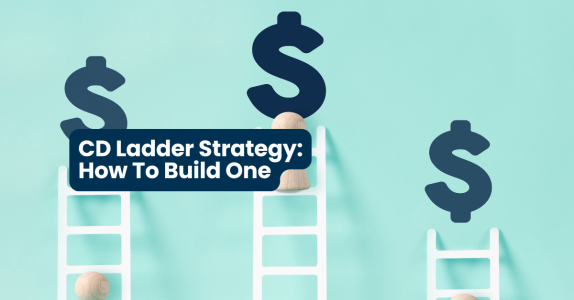
CD Laddering: Laddering is the process of opening several CDs, each with different terms, so that you have a set schedule of funds becoming available providing needed liquidity. This could be to meet an expected cash flow, such as tax payments, quarterly or annual tuition payments, or funding a home renovation. Or it can be a way to keep funds invested until you need them.  

For example, you open four CDs, each for $50,000 but with respective terms of 3-, 6-, 9-, and 12-months. Over the coming year, $50,000 will be available every 3 months. Each time a CD has reached its maturity, you’re able to access some or all the cash. Or you can set it up to let each CD roll over into a new 12-month CD, retaining the same 3-month availability in the coming year, while still earning the higher rates typically offered for CDs.

CD Bullet: If you have a target date that you’d like access to your funds, the CD Bullet is what you’re looking for. Just like an actual bullet, the CD Bullet strategy targets a date in which the saver opens several CDs over several years that will mature around the same time.   

This is a great way to fund long-term savings goals, like buying a house, funding college tuition, taking a dream vacation, or saving for retirement.

CD Barbell: This may not be a strategy you’d add to your physical workout routine, but exercising a CD Barbell gives you the savings results you’re looking for by splitting your investments in two, short- (12 months or less) and long- (five years or more) term CDs.

This is beneficial when you have two savings goals on different timelines. A two-ended Barbell strategy allows you to take advantage of a long-term CD’s higher, fixed interest rate while a short-term CD allows you to reach short-term savings goals, provides early access to funds, or gives you the ability to reinvest in CDs with possible higher rates.    

How to compare CD rates on CD Valet

CD Valet is a CD marketplace that features verified rates from federally insured banks and credit unions nationwide. With tens of thousands of CD offers tracked across the country, CD Valet gives you a clear view of top rates and helps you explore higher-yield CD options with reliable returns.

  • Compare verified rates with confidence: Explore the nation’s top rates from thousands of FDIC-insured banks and NCUA-insured credit unions, compiled in one place.
  • Filter by what matters: Narrow by desired term length, APY, minimum deposit amount, financial institution type, and location. Find nationwide and local offers.
  • Use our tools and calculators: Estimate earnings and break-fee scenarios before you act, or instantly find the Best CD Rates by State using our interactive map.
  • Securely open an account: Click “Open Now” to open a CD account directly with one of our trusted financial institution partners.

How CD Valet Verifies Rates

Every CD rate listed on CD Valet is verified with publicly available data from federally insured banks and credit unions. We operate as a comprehensive marketplace without the bias of favorable placement, ensuring our data remains transparent and accurate. Rates are actively verified and updated in a multi-step review as often as daily. Learn more about our verification process on our website.

Conclusion

Current rates up to 4.50% APY and higher represent significant opportunities to lock in attractive fixed returns. Many banks and credit unions are still offering strong yields, especially through promotional CDs.

As the CD yield curve continues to flatten, smart savers may find it helpful to adopt a strategy that balances flexibility with yield capture, such as building a CD ladder or incorporating no-penalty CDs. Doing a little homework—such as visiting rate comparison websites—can significantly improve returns. In today’s volatile environment, staying informed can be the difference between average or excellent returns.

Next steps:

  1. Visit CD Valet to compare top rates from Financial Partners Credit Union, Spring Bank, Farmers & Merchants Bank and more.
  2. Use CD Valet’s Earnings Calculator or Break-Fee Calculator to determine your best possible earnings opportunities.
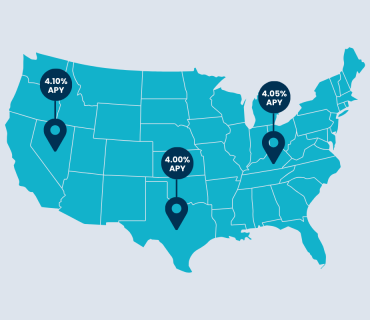
  3. Take a look at the Best Rate By State Map to find the highest interest rates available by state, updated daily. The map pulls real-time offers from banks and credit unions so you can compare APYs, terms and minimum deposits at a glance.
  4. Click “Open Now” to open a CD directly with one of our trusted financial institution partners.

Scroll to Top